

Lingsho
Quadruped inspection platform for complex environments
Configure robot bodies, functional mounts, mission payloads, and AI algorithms for each site and task, from mobile arrival and multi-source sensing to intelligent recognition, remote response, and complete audit trails.
An anomaly can be detected without being resolved
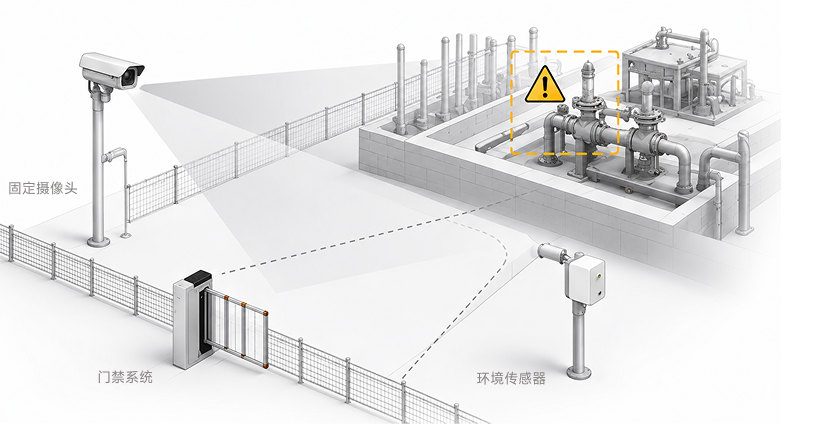
Fixed systems only see
They cannot move closer, change angle, or enter blind spots.
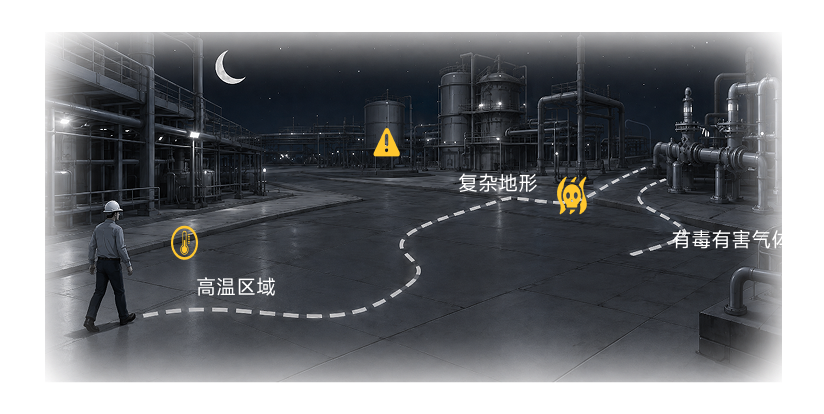
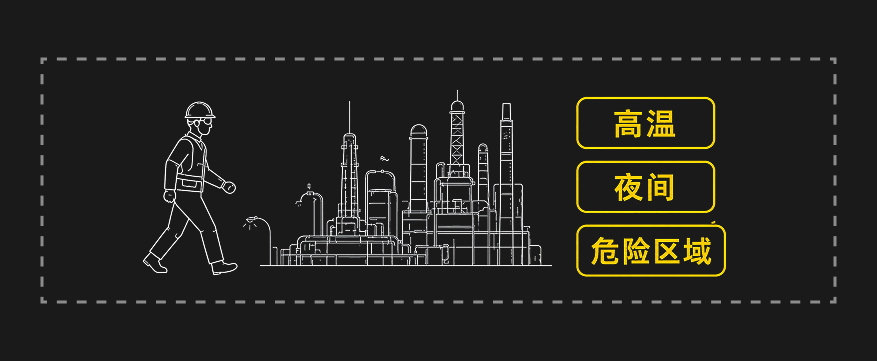
Human access is limited
Night shifts, heat, toxic gases, and difficult terrain restrict response.
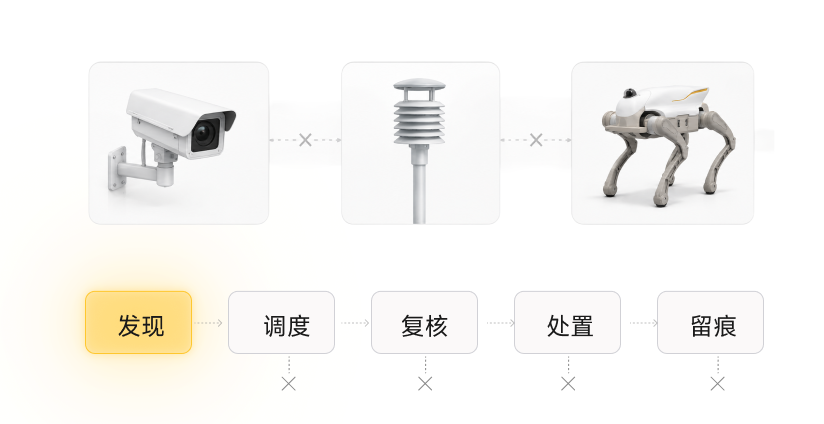
One device is not a loop
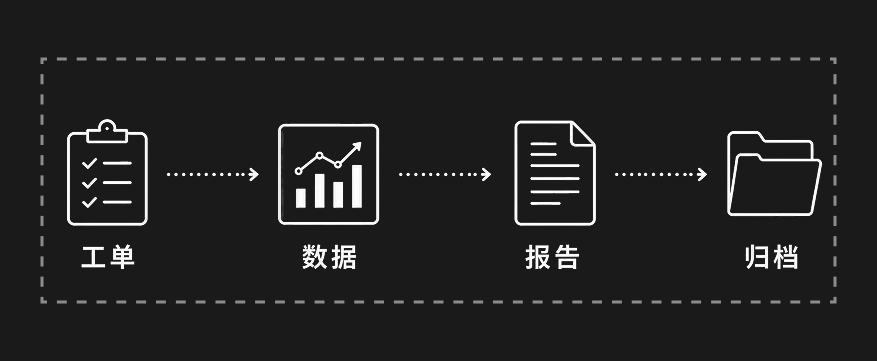
Dispatch, verification, response, work orders, and archiving remain disconnected.
Keep existing systems. Add mobile execution after the alert.
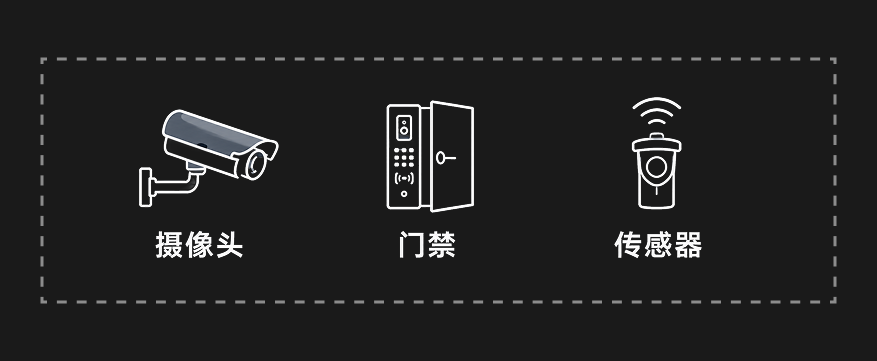
Lingsho connects to cameras, access control, sensors, and alert platforms, turning detected anomalies into on-site tasks that can be verified, handled, and audited.
Existing systems detect the anomaly
Mobile execution is missing
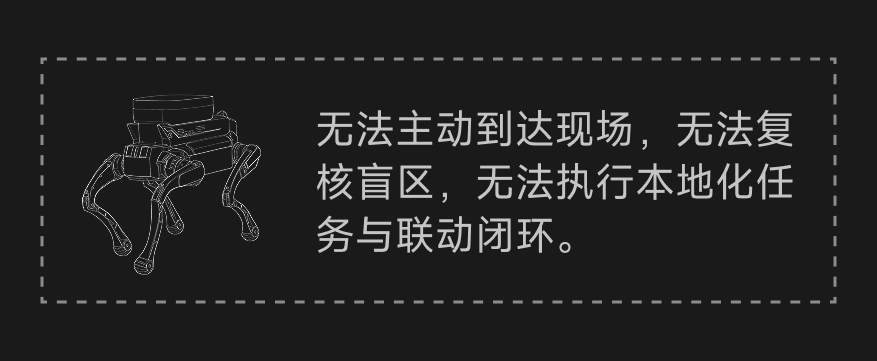
Response still depends on people
The process is difficult to trace end to end
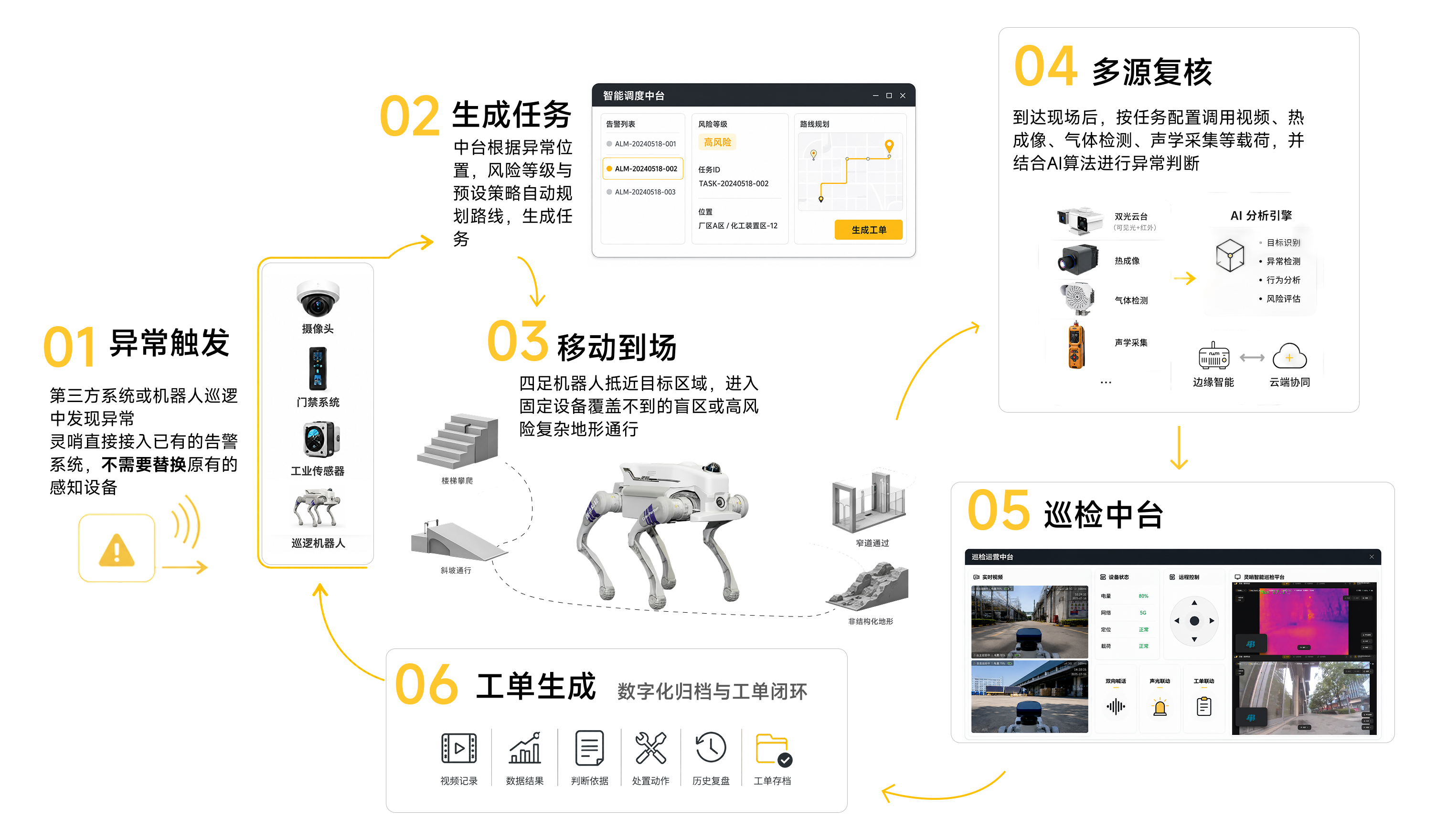
From alert to closure, the quadruped truly arrives on site
Every step, from event trigger to final archive, is configurable, traceable, and reviewable.
A modular platform built for multi-scenario deployment
Compose capabilities from locomotion to operations without being locked to one device.
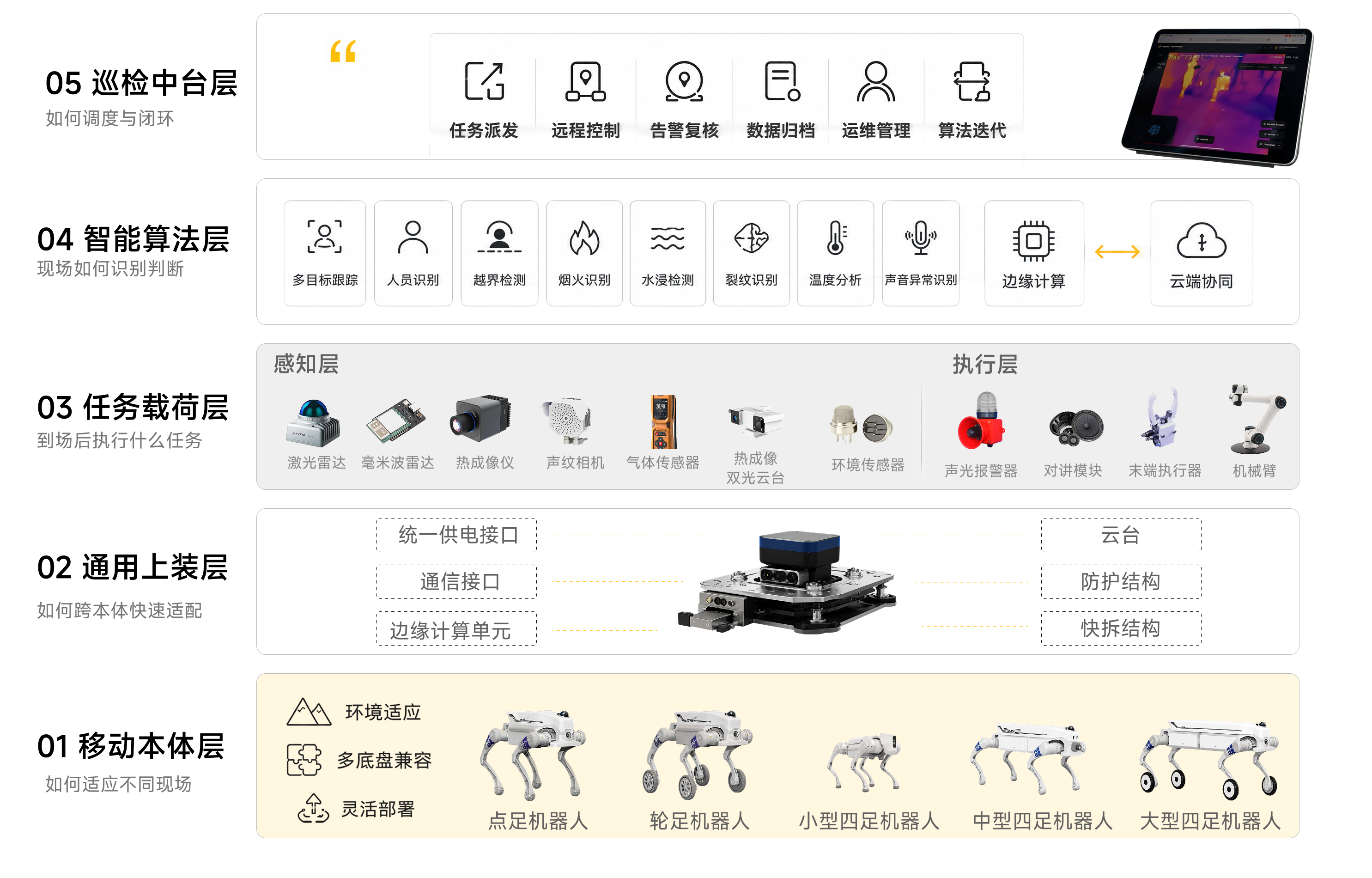
Platform capability, deployed in real environments
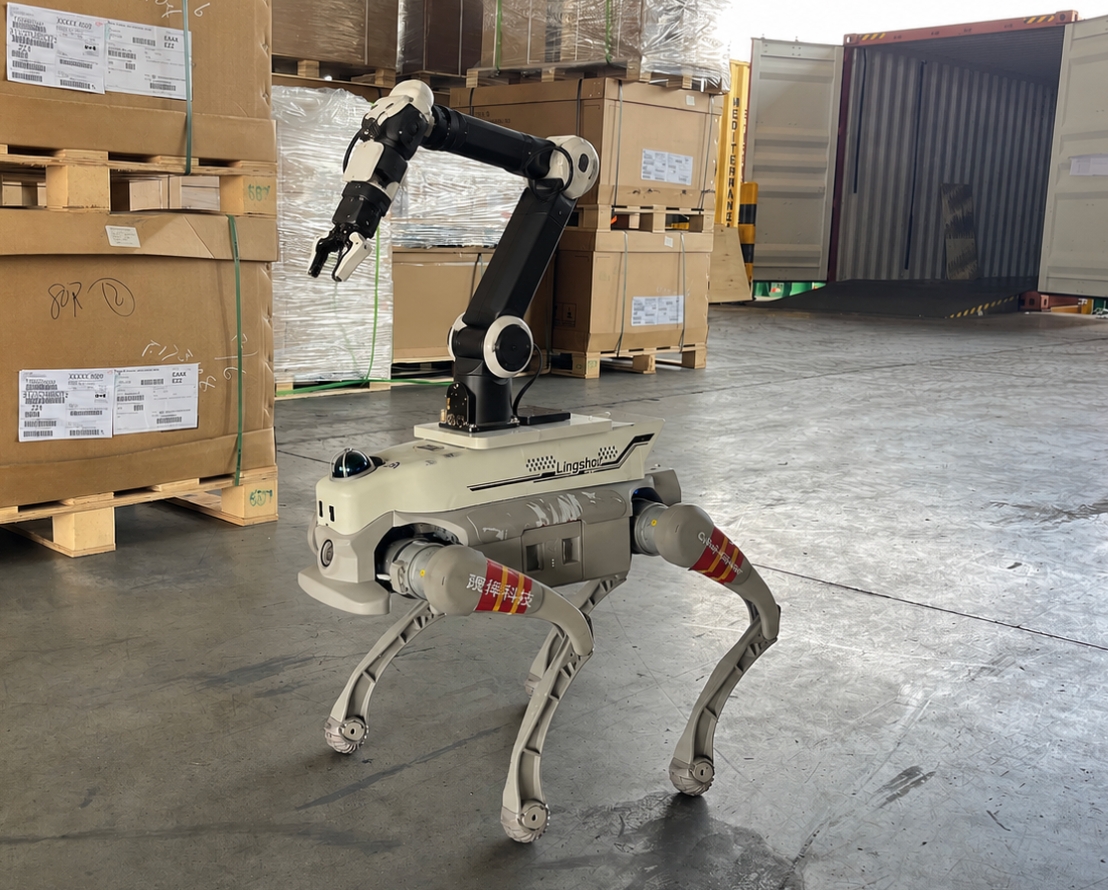
Port supervision
- Toxic gas
- Fumigation
- LNG leaks
- Audit trail
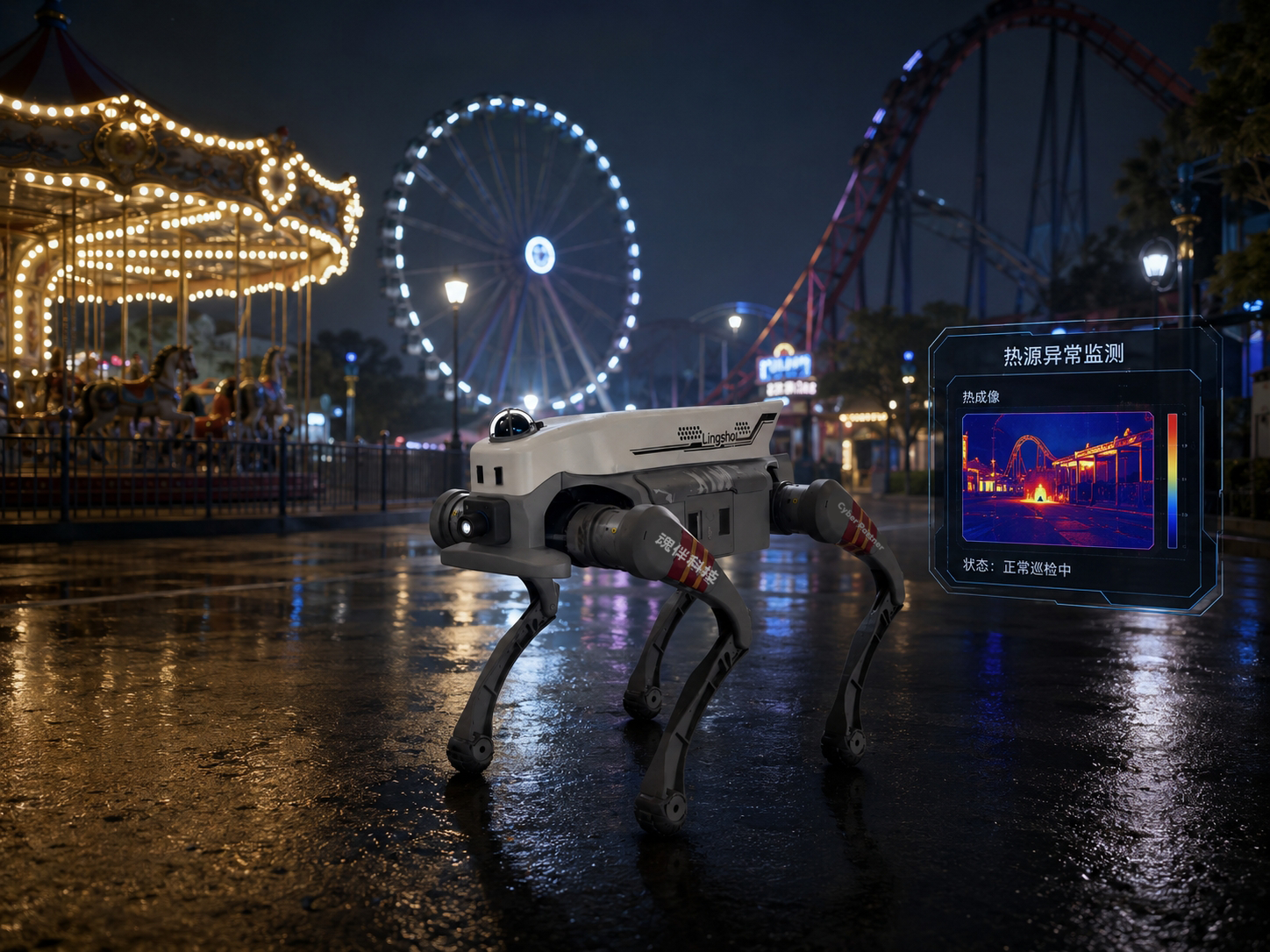
Amusement park safety
- Abnormal heat
- Spark detection
- Lower exposure
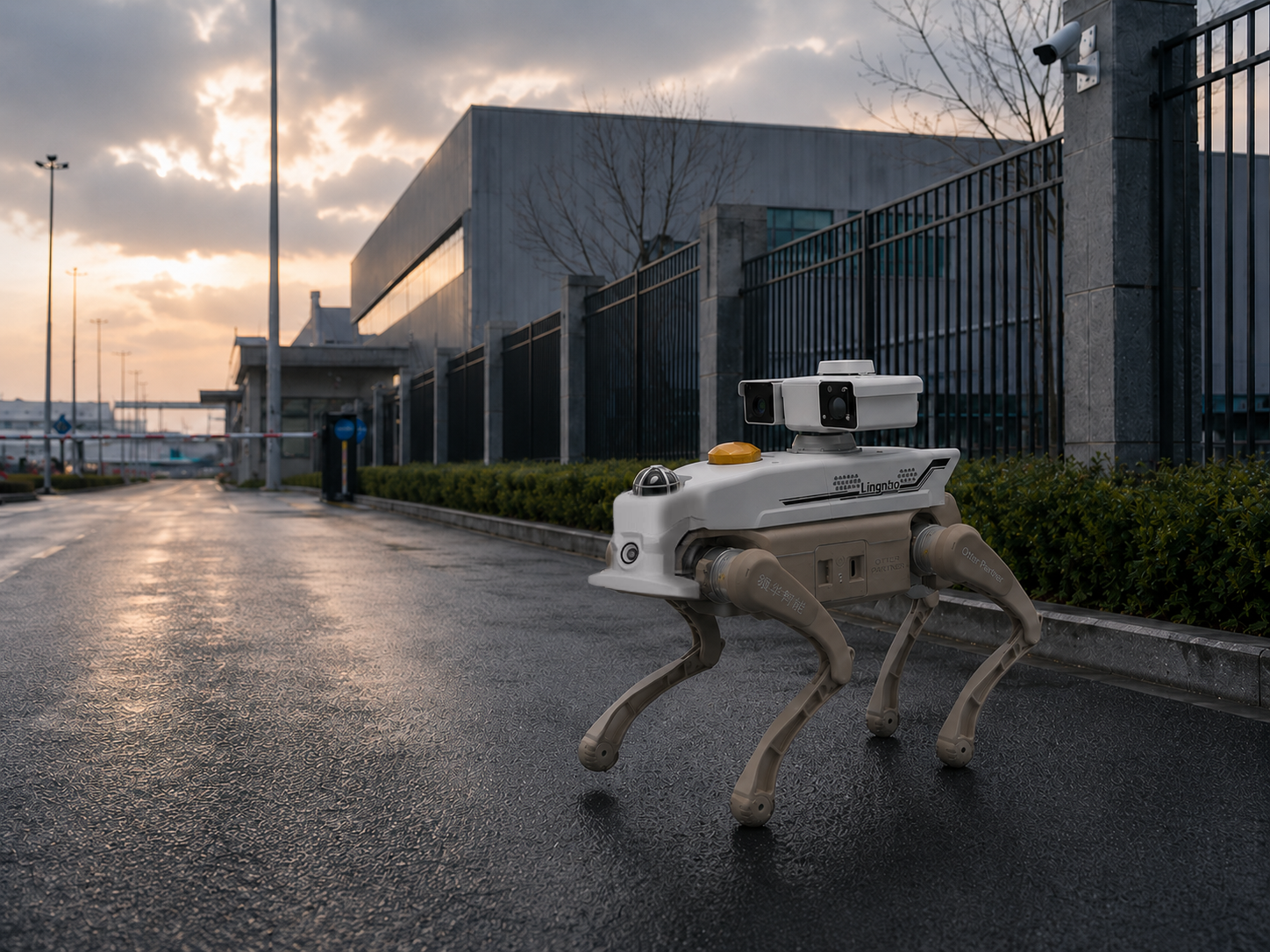
Campus perimeter
- Intrusion
- Loitering
- Facility issues
From scenario definition to continuous operations
Turn device capability into business capability, then keep improving missions, payloads, and algorithms through operational review.
- 01
Site assessment
Map workflows, risks, and existing systems.
- 02
Task breakdown
Translate business needs into robot tasks.
- 03
Payload setup
Select mobility and sensing payloads for each task.
- 04
Virtual training
Validate routes, logic, and exception handling.
- 05
Robot validation
Verify mobility, data quality, and integrations.
- 06
On-site deployment
Configure points, routes, integrations, and training.
- 07
Operations review
Continuously optimize missions, payloads, and algorithms.